

Tapping into your archetypes
Make your unconscious your everyday ally

You’re the hero of your life (and story). It’s time to honour that.

Happy Wednesday, everyone!
You’ve just entered the Plotted Out pub, with a friendly barman*, a roaring fire and comfortable chairs. There’s a massive black cat seated on the window inglenook and a ghost upstairs. Here we share myth, magic, gossip and the occasional tale. Grab whatever drink you like. Including our guest beverage: Butterbeer.
Why archetypes work
Stories are addictive. That’s not surprising: it’s what we are at the end of the day, gossiping mammals with opposable thumbs.
What is surprising are the tales that crop up time and again: the same myths, the same fairytales, the same sayings that pass into folk memory despite the original meaning fading away. For example, “saving a nest egg” dates back to the 14th century and refers to a fake egg you would put in a hen’s nest to encourage her to lay.
Myths are a bigger version of this: the how-tos and hard-won lessons from our ancestors, weaving together something we absorb at an unconscious level. Archetypes are the key: just as we categorise language into nouns, verbs, and adjectives, archetypes are social patterns that help us make sense of the world. Almost every God and saint follows an archetype, as do most comic book arcs, films, fiction and best-selling games. Simon Webb offers a concrete example below: the Harry Potter books rest on a 6,000 year-old archetype, dating back to the Eurasian Steppes.

Weaving archetypes into your life
So, how can you use archetypes in your life and enlist your subconscious to help you?
You don’t have to be a shy virgin or a brooding stranger. You do need to look below the surface clutter to see the patterns playing out - and that’s not easy. Fortunately, there are tools. What you use and how you use it depend on your own culture, background, and preferences.
Runes, cards, books and omens
Your subconscious processes behaviour intuitively, rather than rationally. So sitting down to make a list won’t work. Conscious dreaming, meditation, and journaling when you first wake up can take you further. But if you want to plug into your hidden layers fast, your best bet is symbols.
Runes
The Swiss Army knife of the occult world, runes are an alphabet, a symbol set, a form of magic and a source of poetic sarcasm. They can be cast for divination or slapped on the rocks as graffiti. The earliest example is 2,000 years old, and they continue to capture people’s attention today.
For archetype purposes, you will need a set of runes and a book to tell you their symbolism (I like Odin’s Gateways by Katie Gerrard, but there are plenty of other options). You can draw or carve your own runes on paper, wood, stone or air-dried clay.
For daily purposes, I tend to draw one rune, look up the corresponding symbolism and poem, then take a moment of stillness to see what I am drawn to - what my unconscious is trying to say and what I need to pay attention to in my life.
For this essay, I picked out Dagaz (meaning ‘day’).
”Day is the drihten’s herald, dear to men
Great Metod’s light, a joy and a hope
To rich and poor - for all to use.”
- Anglo-Saxon Rune poem
It symbolises dawn: endings, beginnings, and decisions to be made. For the purposes of this essay, it’s also the passage of time (helped by the fact that it does look like an hourglass).
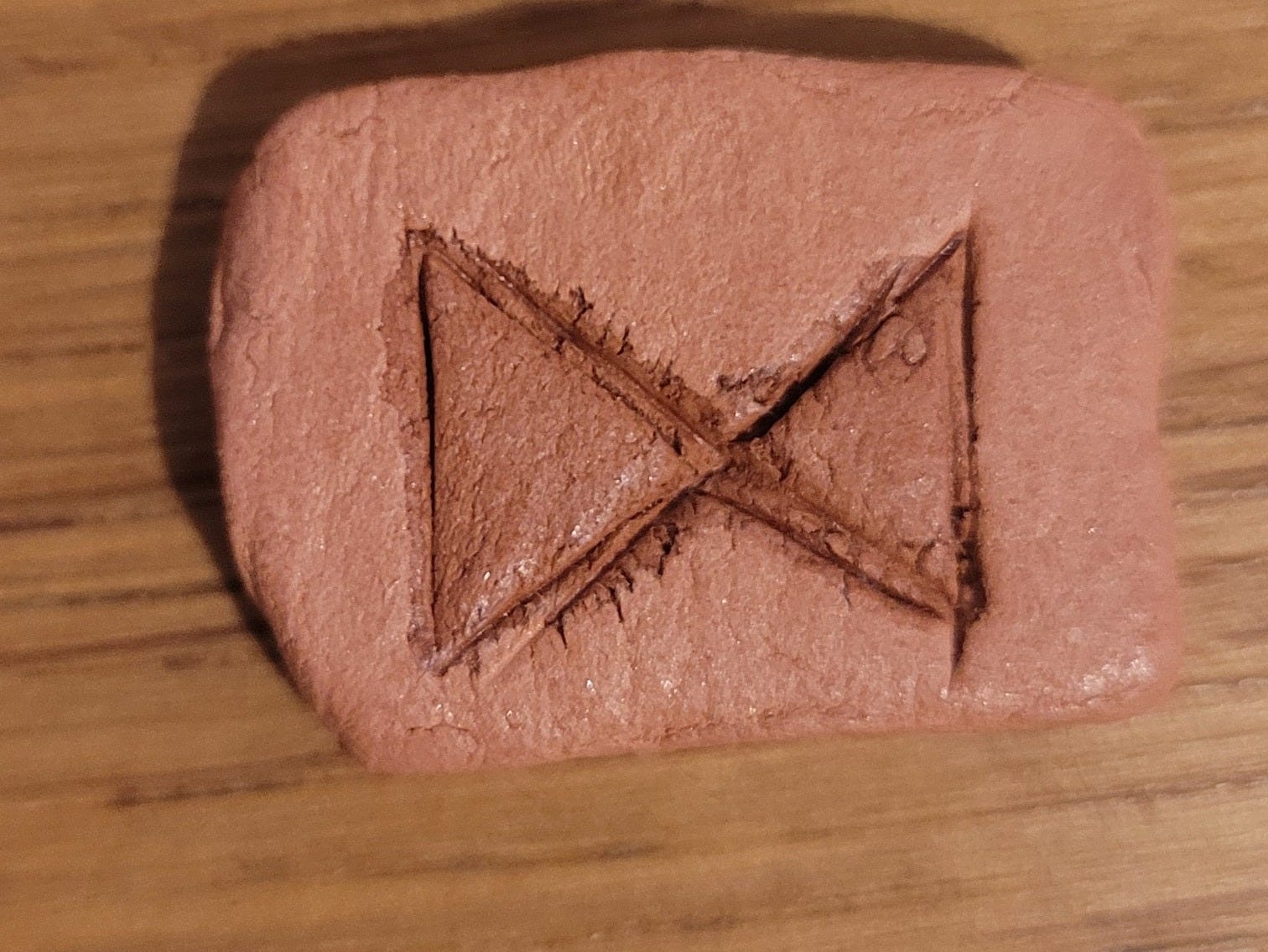
My subconscious is hopeful - and also telling me to get on with it!
Cards
The most obvious one here is Tarot Cards. They started out as a guilded game in the 1400’s, then switched to occult use in the 1800s - helped by the use of colour printing presses. They draw heavily on archetypes and symbolism, and you can get a deck for almost every occasion. The Rider-Waite deck is the most well-known, but it’s possible to get tarots to inspire daily writing, meditation, exercise or self-reflection.
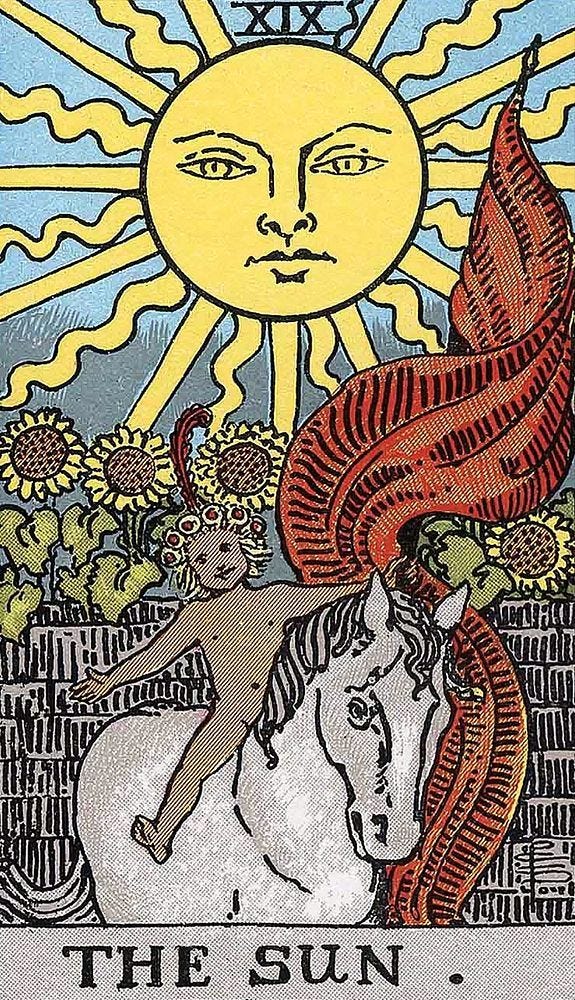
For example, suppose you drew the Sun card twice in a week. On Monday, the sun image might leap out at you, with the ideal of light and warmth (physical, mental or spiritual). You might lack it, or else become it for someone else. Drawing the same card on Thursday, you might focus on the young child instead: youthful joy and new beginnings.
If you are uncomfortable with the Tarot’s reputation or overwhelmed by the large deck, investigate Jungian archetype cards, or look at Lenormand cards instead. You have to be comfortable with the tools you use, so you can listen to what’s happening inside.
Books
In the Middle Ages, biblomancy (the act of divination using the Bible) was a popular pastime. The petitioner would pray for wisdom, open the book with their eyes closed, and pick out a passage to read with their finger. It was regularly condemned by Church councils, which showed the practice was persistent. In fact, it dates back to Roman times, where Homer or Virgil was used instead. Again, this is not about divination (or Bible study), but your internal symbolism. You can use any poetry book or a vivid symbolic story and see where your subconscious perks up. A storm-tossed ship? A fearsome lion? A cyclops to challenge you? What’s really going on downstairs in your mind?
I hope this has provided you with food for thought. And a new way to view yourself as the hero of your life.
Podcasts and preparation
Moving on, I started something new last Friday. My first read-aloud podcast of Sticky Witch. 10-minute little audio chunks, so you can easily catch up with the serial, without wading through 24,000 words (to date). I enjoyed doing it and the next episode is already recorded for this Friday.
The rhythm now is a weekly podcast and a fortnightly written episode.
Once the podcast catches up with the writing, in three months’ time, they will probably come out together.
Author interviews
I’m also restarting my author series, with monthly interviews and recommendations. If you would like to be a victim an honoured guest, please DM me. I love fantasy fiction with romance or horror, and you need to have at least one finished tale under your belt. You and your work get showcased, and we get to see the person behind the screen.
Otherwise, I’m going to gently stalk my latest fiction addiction on Substack, on the basis that you are all likely to enjoy them as well.
Take care and enjoy the sun.
Natalie
*Barmen have a similar lifecycle to mermen. They arrive mysteriously, adopt a habitat, dispense blessings, and people take great care not to give them offence, lest they be permanently excluded.